

Lighting Tips for ADHD-Friendly and Autism-Friendly Interiors
September has been all about getting back into routines for us. Back to school, back to work and, after moving house at the end of August, finally starting to get the house feeling a little more settled. Oscar’s bedroom was one of the first rooms I wanted to tackle and one of the things we thought about really carefully was lighting. In our old house, when we decorated his bedroom, we were very much guided by what he liked at the time. He was really into Marvel, so naturally we chose a Marvel light for his room. It was something he loved, and honestly, I didn't think twice about the type of light it gave off. Looking back now, there's something I would definitely have done differently. The light was very bright and white, and when you're trying to create a bedroom that feels calm and relaxing at bedtime, it probably wasn't the best choice.
It made me realise how easy it is to focus on what a child likes when you're decorating their bedroom, without necessarily thinking about how the room is going to feel and work for them, too.
I think that's one of the things I love about interior design. I'm constantly learning and looking at things differently. So when we started designing Oscar's new room, lighting was something I wanted to think about much more carefully. Lighting is actually one of my favourite parts of interior design, but it’s often one of the things people think about last. We spend so much time choosing paint colours, furniture and accessories, but lighting can completely change how a room feels — and how well it works.
For someone with ADHD, autism or other sensory differences, this can be even more important. Some lighting can feel harsh, distracting or just a bit too much, while other lighting can make a room feel much more comfortable. And the good news is, you don't necessarily need to completely change your home. Sometimes it's just about making a few small changes and thinking a little differently about the lighting you already have.
Why does lighting matter?
Lighting does much more than help us see. Think about how different a room feels in bright sunshine compared with one lit by a harsh ceiling light. Or how much nicer it can feel to switch on a couple of lamps in the evening rather than having every light in the room on full.
For some neurodivergent people, lighting can be particularly important. Bright, harsh or flickering light might feel uncomfortable or distracting, while softer or more adjustable lighting might feel much easier to live with.
But — and this is something I come back to again and again — there isn't one type of lighting that works for everyone. What works brilliantly for one person might not work at all for someone else.
That's why, when I'm designing a home, I want to know about the person living there, rather than just ticking off a list of “ADHD-friendly” or “autism-friendly” features.
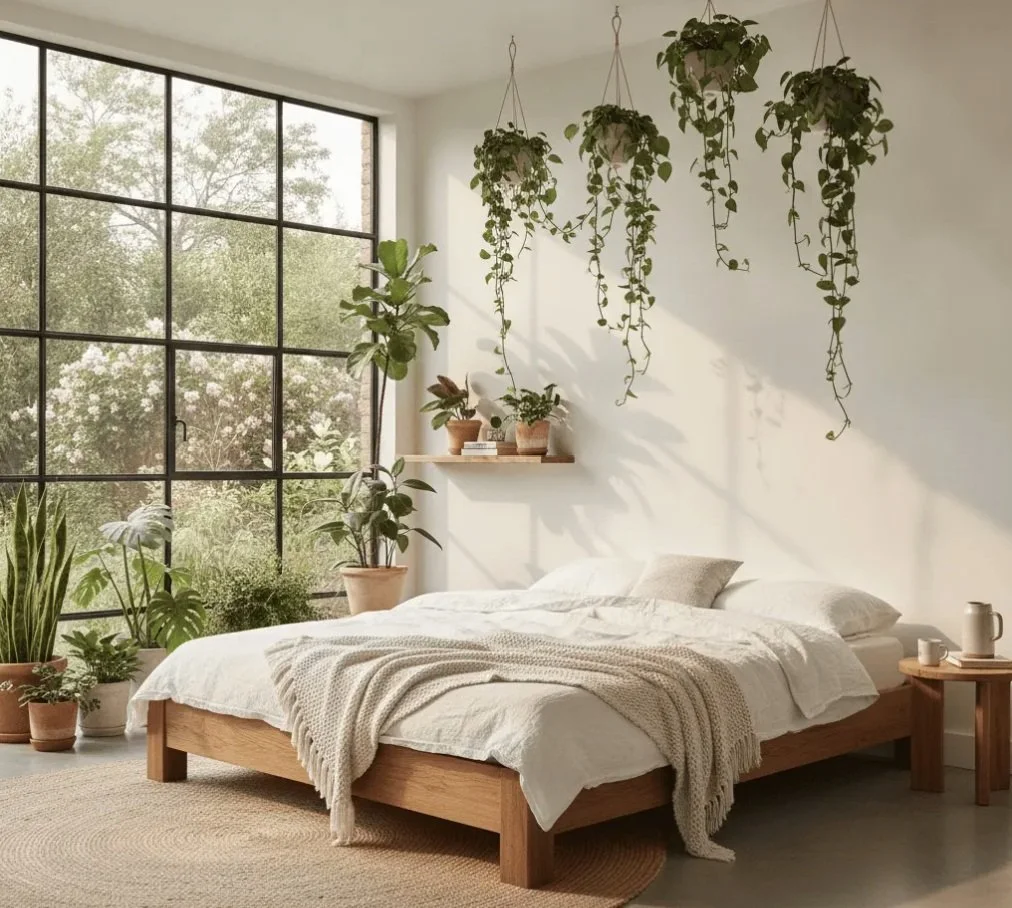
Natural light filling the room
Make the most of natural light
Natural light is one of my favourite design tools. Before I start adding lots of lamps and light fittings, I like to look at what natural light is already doing in a room.
Where does the sunlight come in?
Which areas are naturally brighter?
How does the light change throughout the day?
Where do you actually spend your time?
Sometimes even moving furniture around can make better use of the daylight you already have. And I actually quite like the fact that a room changes throughout the day. I don't think every space needs to feel exactly the same from morning to evening.
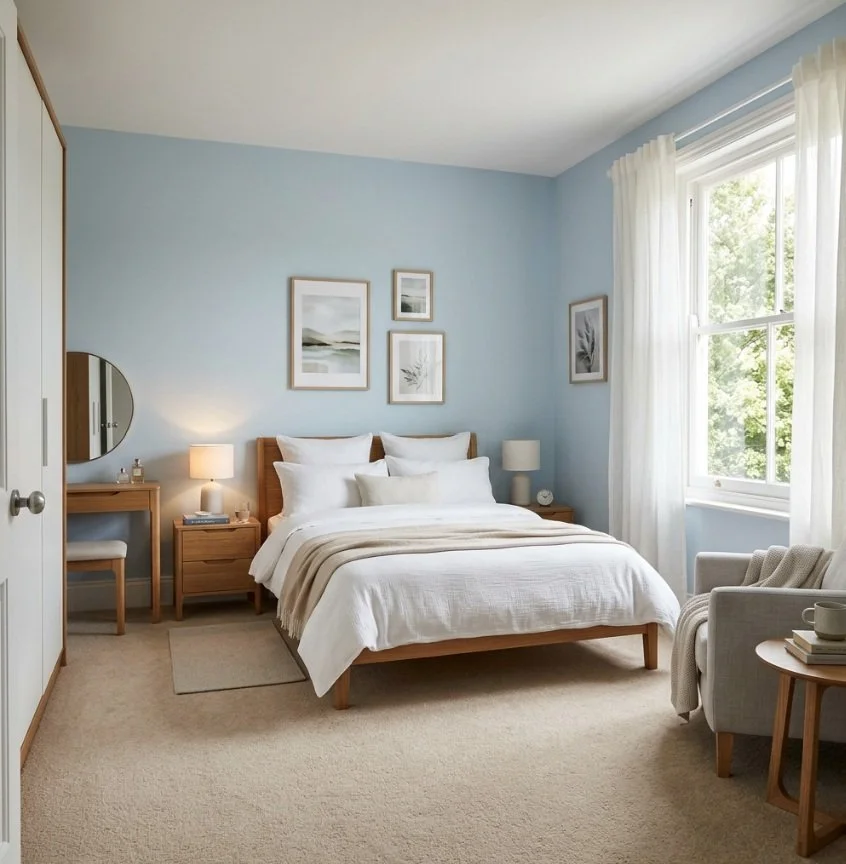
Bedroom with beautiful natural light shining through
Think about what each room needs to do
This is something I think about with every project. A room doesn't have just one job — and your lighting doesn't have to either. A bedroom might need softer lighting when you're winding down, but brighter light when you're getting dressed or trying to find something.
A desk might need good task lighting, while a living room might feel much nicer with a combination of lamps and softer accent lighting.
This is why I love layered lighting.
Instead of relying completely on one central ceiling light, you have different options that you can use depending on what you're doing and how you want the room to feel.
It's also much more flexible.
Don't assume everyone needs the same thing
This is probably one of the biggest things I'd like people to take away from neurodivergent interior design.
There isn't an “ADHD lighting scheme” or an “autism-friendly light.” Some people might love a bright room because it helps them feel alert and focused. Someone else might find that same lighting overwhelming and much prefer softer, lower-level light. And even for the same person, what works during the day might not be what they want in the evening.
So rather than trying to follow a checklist of what an ADHD or autism-friendly home should look like, I think it's much more helpful to ask:
What actually works for this person?
That's exactly what I'm trying to do with Oscar's room. I know him. I know that settling and switching off can sometimes be difficult for him, so I wanted to think carefully about what the room would feel like, particularly in the evening. We're not trying to create a dark room or remove all stimulation.
We're creating choice.
Think about the evening
This is particularly important in a bedroom. Think about what happens in the hour or two before bed. Do you go from bright overhead lighting straight to lights out? Or could you gradually bring the lighting down as the evening goes on?
Having different light sources means you can create a softer atmosphere when you're winding down, while still having brighter light available when you need it. For Oscar's room, this was one of the reasons I wanted to use more than one light source rather than relying completely on the main ceiling light. It's only a small part of his bedroom, but it's part of the bigger picture.
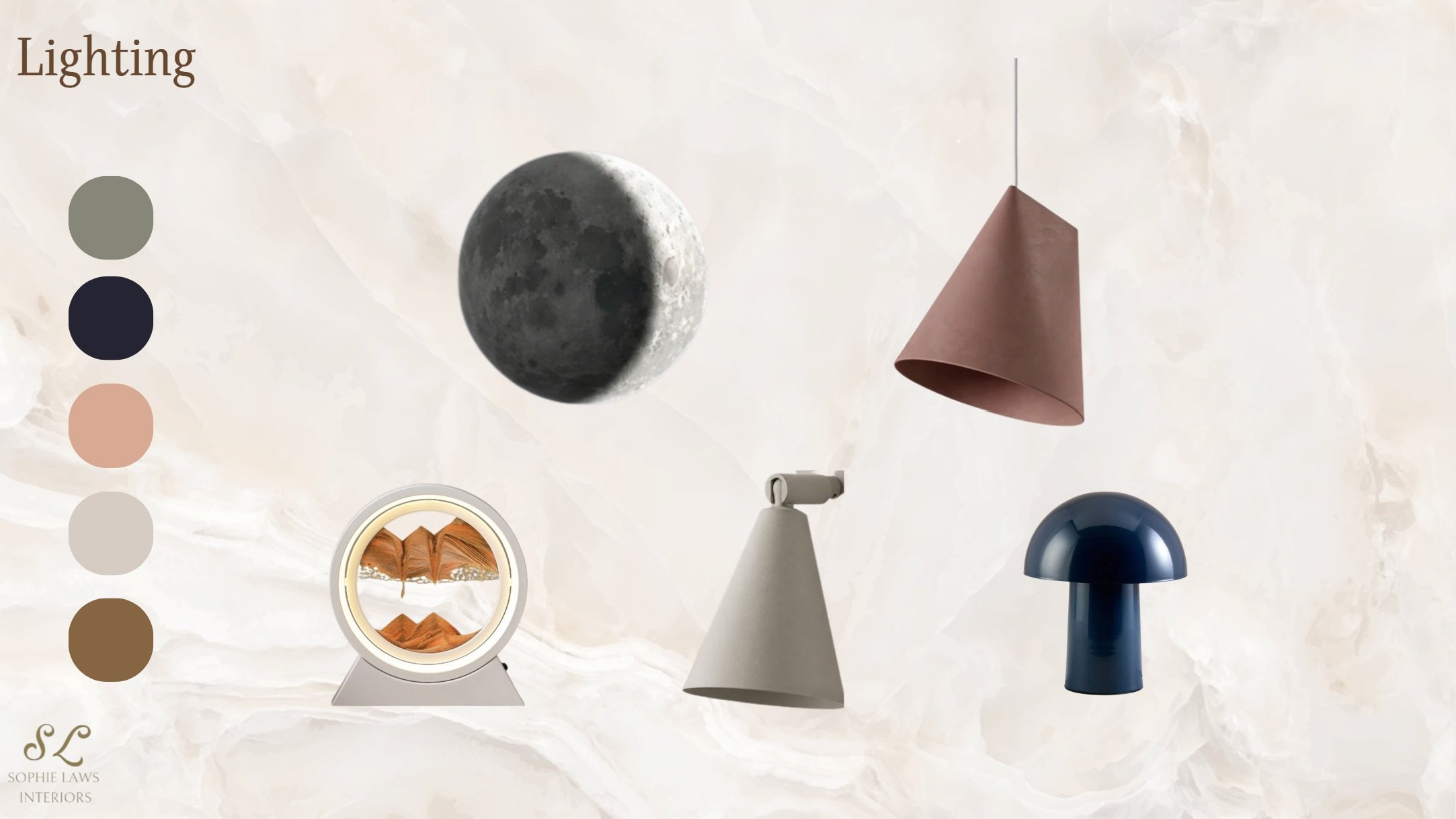
Chosen lights for Oscar’s room
Lighting is only one part of the room
As important as lighting is, it doesn't work on its own. The colour of the walls, the amount of visual clutter, the furniture layout, textures, storage and even the materials you choose all play a part in how a room feels.
That's why I don't think you can take one “sensory-friendly” idea and expect it to work for everyone. I prefer to look at the whole space and, most importantly, the person using it. For Oscar's bedroom, we've thought about everything from the colour scheme and bed to the lighting, textures and layout — all with the same goal of creating a room that feels calm, comfortable and personal to him.
Design for the person, not the diagnosis
For me, this is what neurodivergent interior design is really about. It's not about creating a home that looks a certain way. It's about creating a home that works for the people living in it. And I'm certainly not claiming to get everything right first time. Oscar's old bedroom is actually a good example of that. We chose something he loved, but we didn't think deeply enough about how the lighting would work alongside the rest of the room and his bedtime routine.
Now I look at things differently.
If you're designing for someone with ADHD, autism or sensory processing differences, lighting is definitely something worth thinking about — but there isn't a perfect formula.
Start with the person.
What feels too much?
What helps them focus?
What helps them relax?
What makes everyday routines easier?
Then see what you can change. Sometimes it's the small things that make the biggest difference.
Want to make your home work better for your family?
If you're not sure where to start, my ADHD Home Design Guide and Autism Home Design Guide are there to give you practical ideas and help you feel a little more confident about making changes at home.
And if you'd rather have someone look at your space with you, I'd love to help.
Whether you need a little direction with one room or you're ready for a complete redesign, my approach is always the same:
I want to understand how you live first, and then design around you.
If you'd like to chat about your space, you can book a complimentary 30-minute discovery call with me. There's no pressure and no expectation that you need to know exactly what you want before we speak.
Just come and have a chat with me about what's working, what's not and what you'd like your home to feel like.
Let's create a home that feels like it was designed for your family — because it was. 🤎