

Neurodivergent Design
I love Spring! Isn’t is so nice to have the sun out, bulbs starting to bloom and Easter on its way? The kids are about to start their school holidays and the nicer weather makes it so much easier to do things with them. We have an annual parking pass for the 9 country parks in our area and I try to use them as much as possible and bring their bikes and scooters. Fresh air is so good for all of us and it also wears them out….a bit!
I wanted to share one of the events I attended in March, an Angel Conference for a charity called Stronger Together Through Cancer. I first got involved with the charity from attending a local networking event, Ladies who Latte. I hugely admire the work Adelle, Fiona and their team do supporting business owners through their cancer journey and since January I have been making a monthly donation to support this incredible work. Both of these inspiring women have been in this situation themselves and now offer personal and professional support to others in that position. 34 ‘Angels’ attended the event wearing our ‘Stitch your Story’ jumper (all proceeds go to Stronger Together Through Cancer), coming together to grow this charity. If you want to support or if you want to purchase your own jumper where you can choose a quote personal to you stitched on, please head on over to www.strongertogetherthroughcancer.org/shop-to-support
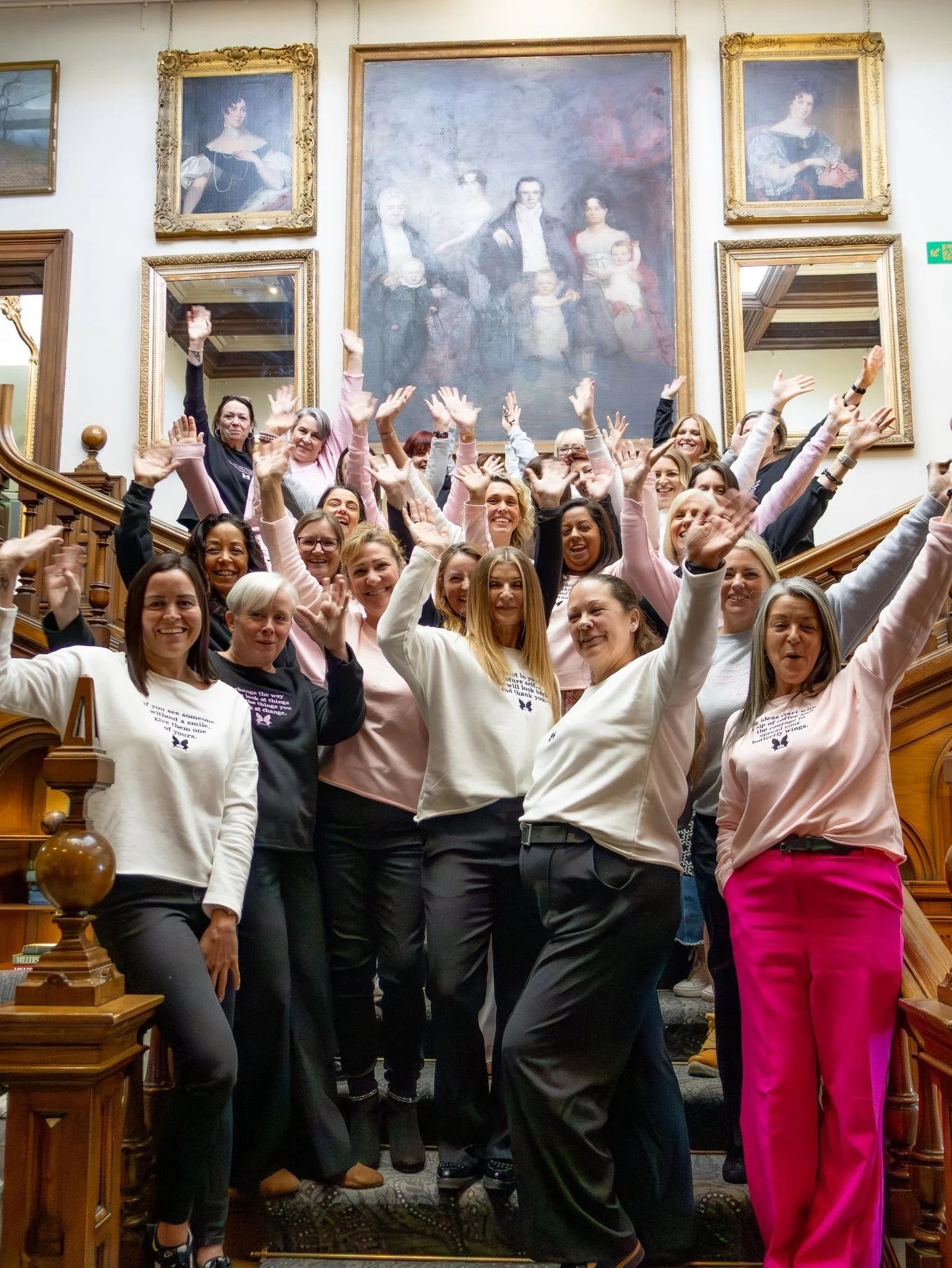
The ‘Angels’ in their ‘Stitch your Story’ jumpers for Stronger Together Through Cancer
In January I told you I had a new goal for business which was to include neurodivergent design within my services. As you (hopefully) may have seen I have created a Home Design Guide for ADHD to help people implement changes into their home to accommodate the needs of someone in their household with ADHD. I am now in the process of creating for one for Autism.
It is estimated that over 700,000 people in the UK have a diagnosis of autism, with some estimates suggesting the true figure could be over 1 million, or more than 1 in 100 people. Autism is a lifelong condition, and including family members, it affects 2.8 million people. Roughly 1% of the UK population is estimated to be on the autism spectrum. Approximately 1 in 100 children in the UK have a diagnosis of autism. However, research suggests the actual number could be much higher, with over 1.2 million autistic people estimated in England alone.
So if the numbers are so high we need to start ensuring spaces are adapted for the needs of autistic people and the first and most important place to start is in the home, their safe space, their place to unwind, unmask and be themselves.
My main design focus is residential interior design, in particular, busy family homes which need to be functional and practical but also somewhere you can’t wait to get to after a busy day. With that in mind and with figures increasing, it is important that when I am designing a home for a family I take in consideration the special requirements of all members of that household.
There is no definitive number of neurodivergent conditions because the term covers a wide and evolving range of conditions, and some sources include different types of conditions. However, I can name at least 13 and with that in mind I have my work cut out!
This month I am particularly looking at Autism in children which is a lifelong neurodevelopmental condition affecting how they communicate, interact socially, and perceive the world. It is a "spectrum" disorder, meaning symptoms vary widely, but common traits include challenges with social interaction, communication difficulties, repetitive behaviours, intense interests, and sensory sensitivities.
Key Characteristics and Signs:
Autistic children may experience the world differently, which can manifest as:
Social Challenges: Limited eye contact, not responding to their name by 12 months, difficulty understanding others' emotions or thoughts, and a preference for playing alone.
Communication Differences: Delayed speech, repeating phrases (echolalia), or interpreting language very literally.
Repetitive Behaviours & Intense Interests: Engaging in repetitive movements (hand-flapping, rocking), having a strict need for routine, and showing intense focus on specific topics or objects.
Sensory Sensitivities: Unusual, intense reactions to sounds, smells, lights, tastes, or textures.
Autism in young children
Signs of autism in young children include:
not responding to their name
avoiding eye contact
not smiling when you smile at them
getting very upset if they do not like a certain taste, smell or sound
repetitive movements, such as flapping their hands, flicking their fingers or rocking their body
not talking as much as other children
not doing as much pretend play
repeating the same phrases
Autism in older children
Signs of autism in older children include:
not seeming to understand what others are thinking or feeling
unusual speech, such as repeating phrases and talking ‘at’ others
liking a strict daily routine and getting very upset if it changes
having a very keen interest in certain subjects or activities
getting very upset if you ask them to do something
finding it hard to make friends or preferring to be on their own
taking things very literally – for example, they may not understand phrases like "break a leg"
finding it hard to say how they feel
Autism in girls and boys
Autism can sometimes be different in girls and boys.
Autistic girls may:
hide some signs of autism by copying how other children behave and play
withdraw in situations they find difficult
appear to cope better with social situations
show fewer signs of repetitive behaviours
This means autism can be harder to spot in girls.
To create an Autistic friendly home the priority needs to be sensory regulation, safety and creating a calm and sensory balance, but specific needs vary. It is important to emphasise that Autism is individual, everyone is different and people need to learn what calms them and what triggers stress to them.
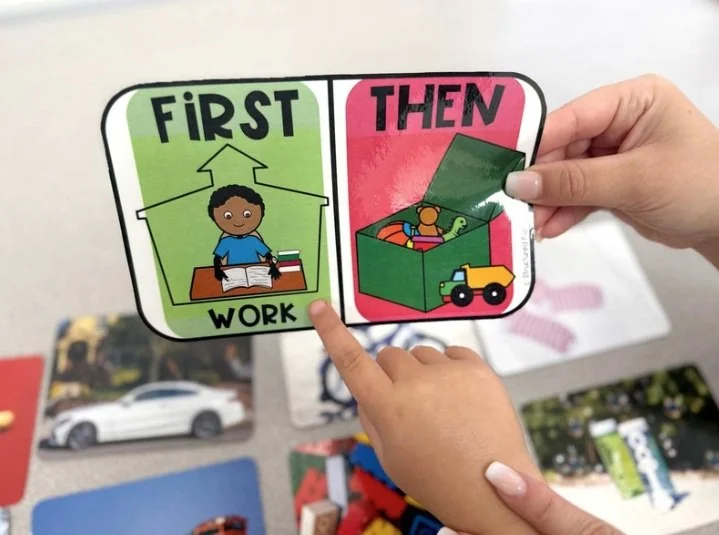
Clear communication
Children with Autism need a safe, structured and sensory friendly home environment to reduce overwhelm and encourage comfort. Their core environmental needs are:
Routine: Children with autism often thrive on routine to reduce anxiety. Using visual schedules, timelines, and checklists helps them understand and anticipate daily activities.
Sensory-Friendly Spaces: Create a calm zone that provides a retreat from overstimulation. Include their sensory toys, soft blankets, noise cancelling headphones and soft lighting. This should be a space where they are allowed to engage in self-stimulatory behaviours.
Safety Measures: Similar to childproofing, it is crucial to use safety gates, lock away hazardous items, and secure furniture to create a safe environment.
Clutter Reduction: By reducing the amount of visual clutter you will encourage a calm environment.
Zoning: Set up designated zones to separate the space. Play area for play, study area for homework and focus, calm area to relax and retreat.
Physical Movement: Provide opportunities for movement through indoor trampolines, swing chairs, or exercise balls to help them regulate their senses.
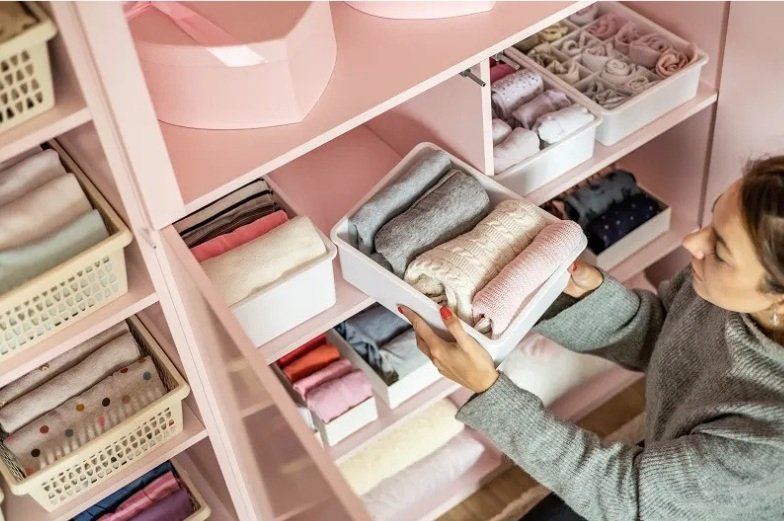
Clear organisation
There is of course a lot more to it and planning the design of a space for a child with Autism takes a lot of consideration. I am currently in the process of creating a digital guide which will be available to purchase soon so keep your eyes on my social media for the release date.
Do you have a neurodivergent member of your household? Would you like help and support to create them a space where they feel happy, comfortable and safe? If so, please contact me via email sophielawsinteriors@outlook.com or have a look at my website, www.sophielawsinteriors.co.uk and I will be so excited to help you make your space a happy place!