

How to Design a Calm Family Home Without It Feeling Minimal or Cold | Neurodivergent Interior Design Tips
How was your June? It was a busy one for us! It was a bit of a birthday-heavy month with celebrations for my son, sister-in-law, father-in-law and my mum. On top of that, one of my very close friends welcomed a beautiful baby girl into the world, which was incredibly special.
As much as I love having a full diary and celebrating with family and friends, it definitely reminded me how busy family life can feel. Between work, school runs, birthdays, visitors and everything else that comes with daily life, our homes can quickly become places of chaos rather than calm.
As an interior designer, one of the things I'm most passionate about is helping families create homes that feel peaceful and supportive without sacrificing warmth, personality or practicality. Because let's be honest, most of us don't live in minimalist show homes, and we probably wouldn't want to.
So today, I wanted to share some thoughts on how to design a calm family home without it feeling minimal or cold.
When people think about creating a calm home, they often picture white walls, empty surfaces and minimalist interiors that look beautiful in photographs but aren't particularly practical for family life.
The reality is that a calm family home doesn't have to feel stark, clinical or devoid of personality. In fact, some of the most peaceful homes are filled with colour, treasured possessions, cosy textures and evidence of the people who live there.
Whether you're navigating busy family life, working from home, or designing for neurodivergent individuals with specific sensory needs, creating a calm environment is less about removing everything and more about designing intentionally.
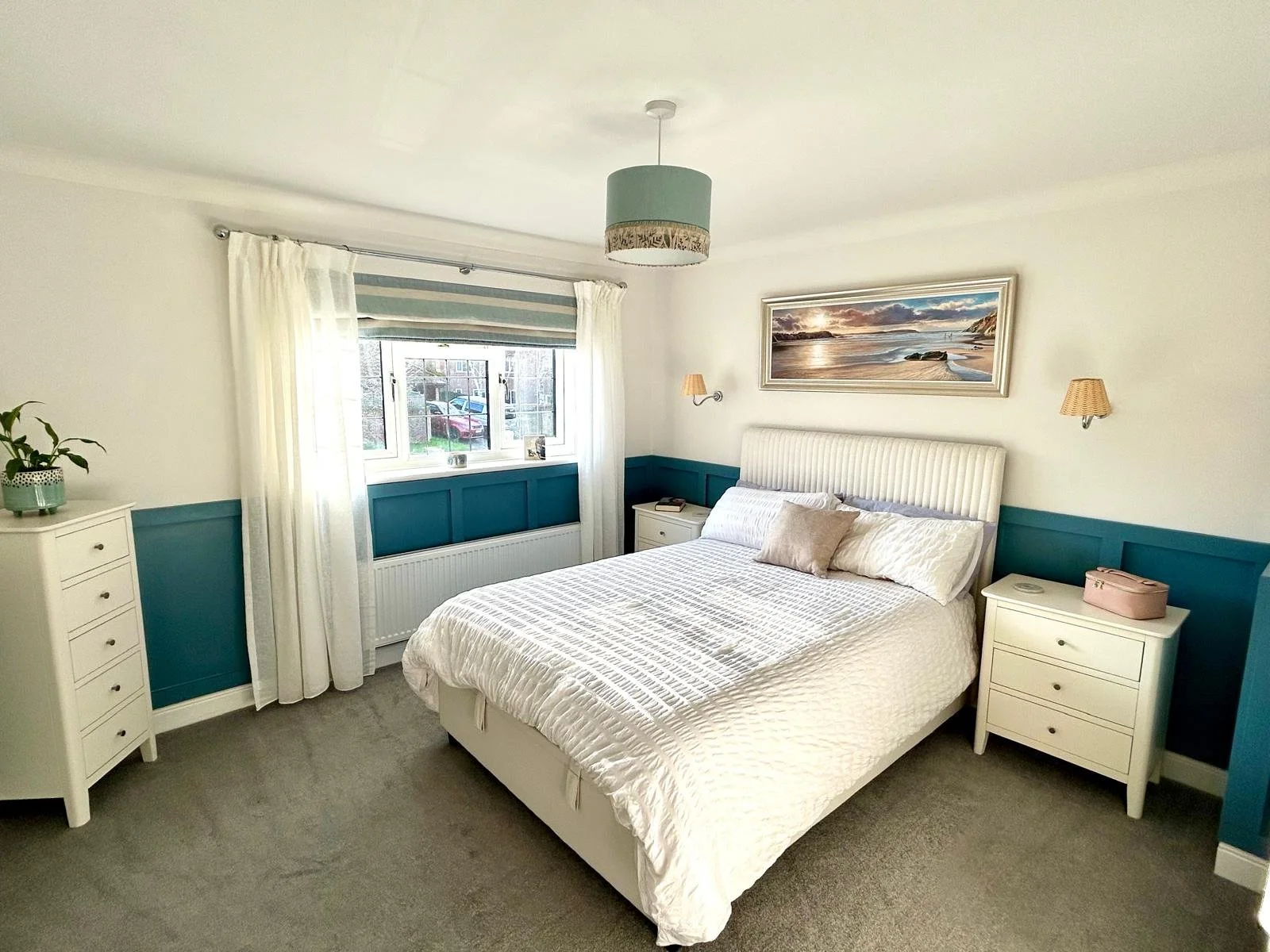
A calm bedroom with colour, texture and personality
Calm Doesn't Mean Minimal
One of the biggest misconceptions in interior design is that calm spaces must be minimal spaces. A family home should feel lived in. Toys, books, artwork, family photographs and favourite pieces all contribute to a sense of comfort and belonging. The key is ensuring these items have a place and don't create visual overwhelm and overstimulation.
Rather than stripping a room back, I focus on creating balance through thoughtful spatial planning for homes. When furniture layouts work well and storage solutions are carefully considered, a room can feel organised and relaxing without losing its character.
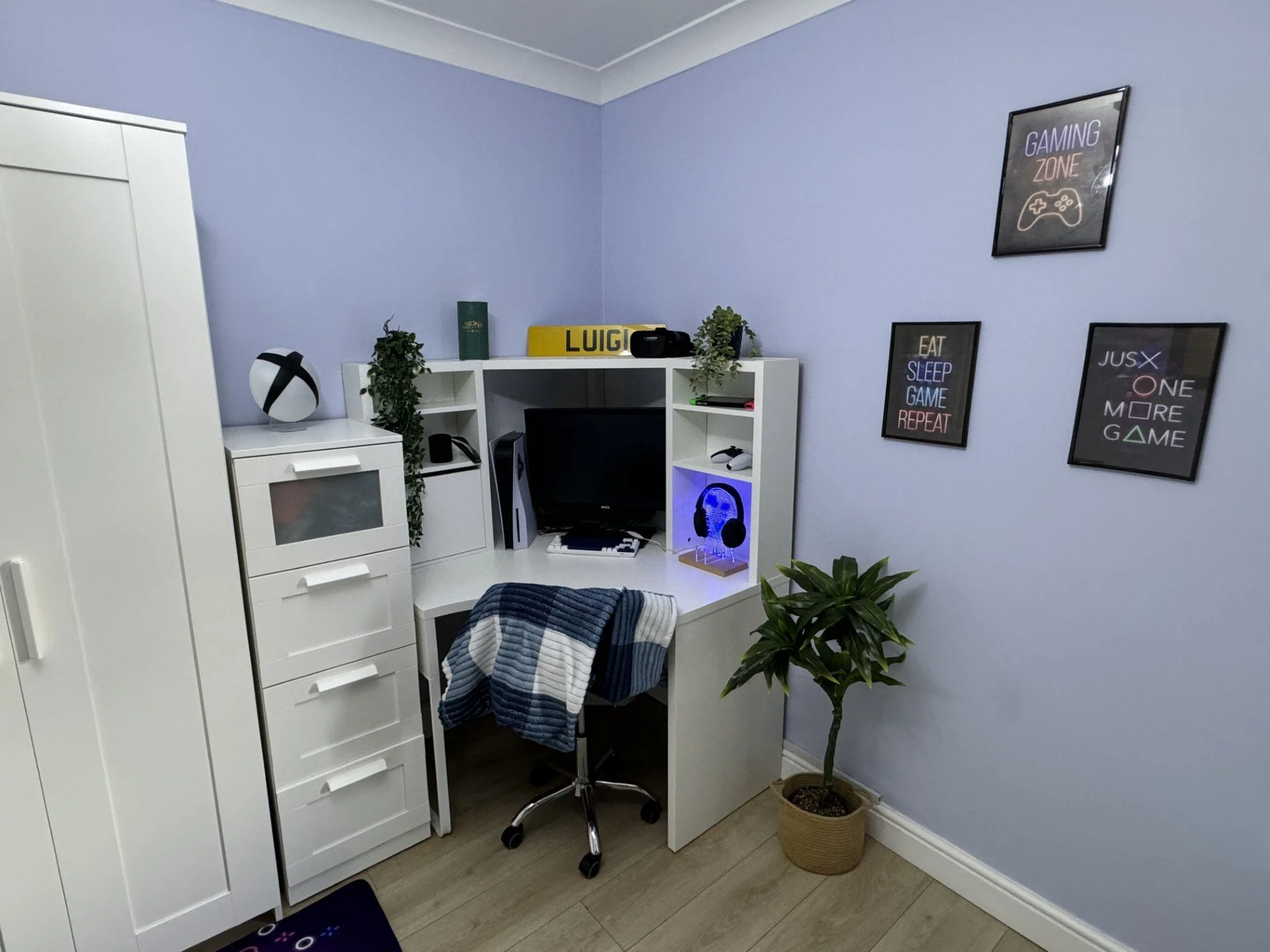
A well-organised space that feels calm, personal and lived in
Consider Sensory-Aware Design
As awareness of Neurodivergent Interior Design grows, more families are recognising the impact their environment can have on wellbeing. For people with ADHD, Autism, Autism Spectrum Disorder (ASD), or Sensory Processing Disorder (SPD), the home environment can significantly influence comfort, focus and emotional regulation. That doesn't mean every home needs to look the same. Instead, it means creating sensory-aware spaces that support the people who live there.
Good design acknowledges that every family is different. The most successful inclusive spaces are those that respond to the unique needs of the people using them, helping to reduce overwhelm and create environments where everyone can thrive.
As awareness of neurodivergent interior design continues to grow, many people are looking for practical ways to make their homes feel calmer and more supportive. That's why I've created two home design guides; one focused on ADHD and one on Autism. They are designed to help you shape your space with confidence, whether you're supporting ADHD, Autism Spectrum Disorder, sensory processing differences, or simply want a home that feels less overwhelming and more thoughtfully considered.
Think About Colour Differently
Many people assume calm interiors must be beige. The goal isn't to eliminate colour but to use it thoughtfully. Consistency throughout the home can help create flow, making spaces feel connected and less visually overwhelming. When selecting colour schemes, I often encourage clients to consider how they want a room to feel rather than simply following trends.
Use Biophilia to Bring Nature Indoors
One of my favourite ways to create a calmer home is through biophilic design. Biophilia is the concept of connecting people with nature through their environment, and it can have a powerful impact on wellbeing. Even small changes can help create a more restorative and relaxing atmosphere.
Prioritise Spatial Awareness
Furniture placement has a huge impact on how a room feels. A beautifully decorated room can still feel stressful if movement through the space is awkward or restricted. Good furniture and layout planning considers how people naturally move around a room. It ensures walkways are clear, seating feels comfortable and each area has a clear purpose. For families, this is especially important. Children need space to play, adults need areas to relax, and everyone benefits from a layout that feels intuitive and easy to navigate. This is where detailed floor plans and thoughtful room layouts can make all the difference.
A Calm Home Should Still Feel Like You
Ultimately, a calm home isn't about following a particular style. It's about creating an environment that supports your family, reflects your personality and helps everyone feel comfortable within it. Whether you're looking for a complete room redesign service, need help with furniture placement, or are seeking guidance through an interior design consultation, the goal should always be the same: creating a home that feels both functional and welcoming.
If you're struggling to create a home that works for your family's unique needs, I offer both online and in-person interior design consultation services, helping families create beautiful, practical and inclusive spaces wherever they are based. If you're looking around your home and wondering where to start, you're not alone. Sometimes knowing what needs to change is the easy part; knowing how to make it happen can feel much more overwhelming.
That's exactly why I've created my digital guides. They take a deeper dive into creating functional, beautiful family homes, with practical tips, planning advice and step-by-step guidance that you can implement at your own pace.
Ready to create a calmer home?
Every family is different, and every home should reflect that. Whether you're designing for neurodiverse individuals, managing busy family life, or simply craving a little more calm, thoughtful design can make a huge difference.
If you'd like more detailed guidance, my digital guides are packed with practical advice on creating sensory-aware, family-friendly spaces that work for real life.
Do you need help making your home a clam space? If so, please contact me via email sophielawsinteriors@outlook.com. If you would like to purchase one of the home design guides, please visit https://www.sophielawsinteriors.co.uk/shop where you will also receive a free design voucher!